Sleep & Bedding · Feature
It is rarely one dramatic thing. It is usually four quiet, ordinary ones — a duvet that holds too much warmth, bedding that cannot breathe, a room that never cools down, and a partner running at a different temperature. Here is what to look for first, and what you can change tonight.

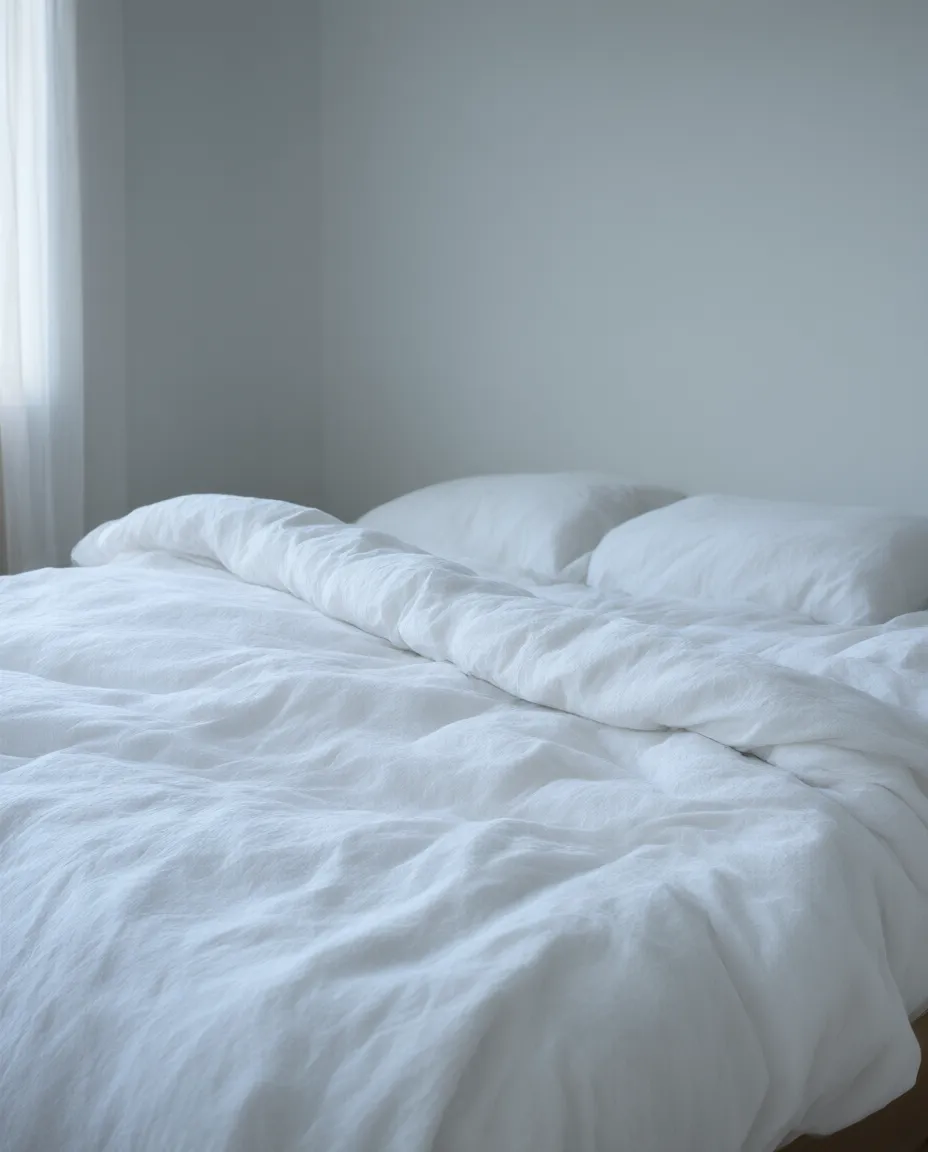
Photograph: a percale cover, rumpled the way it settles overnight.

Part one · The reasons
None of these are unusual, and none of them are a personal failing. They are simply how bedding, rooms and two bodies interact.
You fall asleep fine. Then, somewhere around the small hours, you surface — awake, sticky, with an arm thrown outside the covers trying to dump heat. Most people assume this is just how they sleep. In our experience making bedding, it is far more often the setup around the bed.
Worth saying plainly: we make bedding, not medical advice. Occasional warm nights are ordinary. If yours are persistent or worrying, that conversation belongs with a doctor, not with a duvet label.
Try tonight
Before you buy anything, walk the list. Most warm sleepers find one or two of these already explain the night — and they are free to test.

Cool air first; bedding second.
Aim for the coolest bedroom you can stand, ventilate for ten minutes before bed, and turn overnight heating off rather than down.
Move sheets and pillowcases to cotton or linen. This is the single cheapest change, and it is usually the most noticeable within a week.
Read the label, not the marketing name. If it says polyester fill with a microfibre cover, it was built to hold warmth, and it will keep doing that.
Two lighter covers you can separate beat one heavy one you have to endure all night. Layers let each person adjust their own side.
Two single duvets inside one large cover is an old hotel trick: it looks like one duvet, and nobody negotiates at 3 a.m.
Pull the bed back from the wall, skip the plastic protector, and let the base breathe. Trapped air under a mattress pad runs warmer than people expect.
Warm nights are usually an engineering problem. Fix the airflow, then fix the fabric, then fix the warmth rating — in that order.
Part two · One option
Coolnest is a temperature-regulating duvet built for people who run warm. The fill is a breathable fibre blend chosen to let warmth move through it rather than bank it; the cover is cotton percale — a tight, matte, cool-to-the-touch weave rather than a brushed synthetic.
It is machine washable, which matters more than it sounds: a duvet you cannot wash is a duvet you eventually replace early. It comes from $149, and you sleep on it for 100 nights before deciding.
We are honest about scope. This is bedding, not treatment. If your warm nights survive a cooler room, cotton sheets and a lighter cover, a different duvet may only be part of the answer.

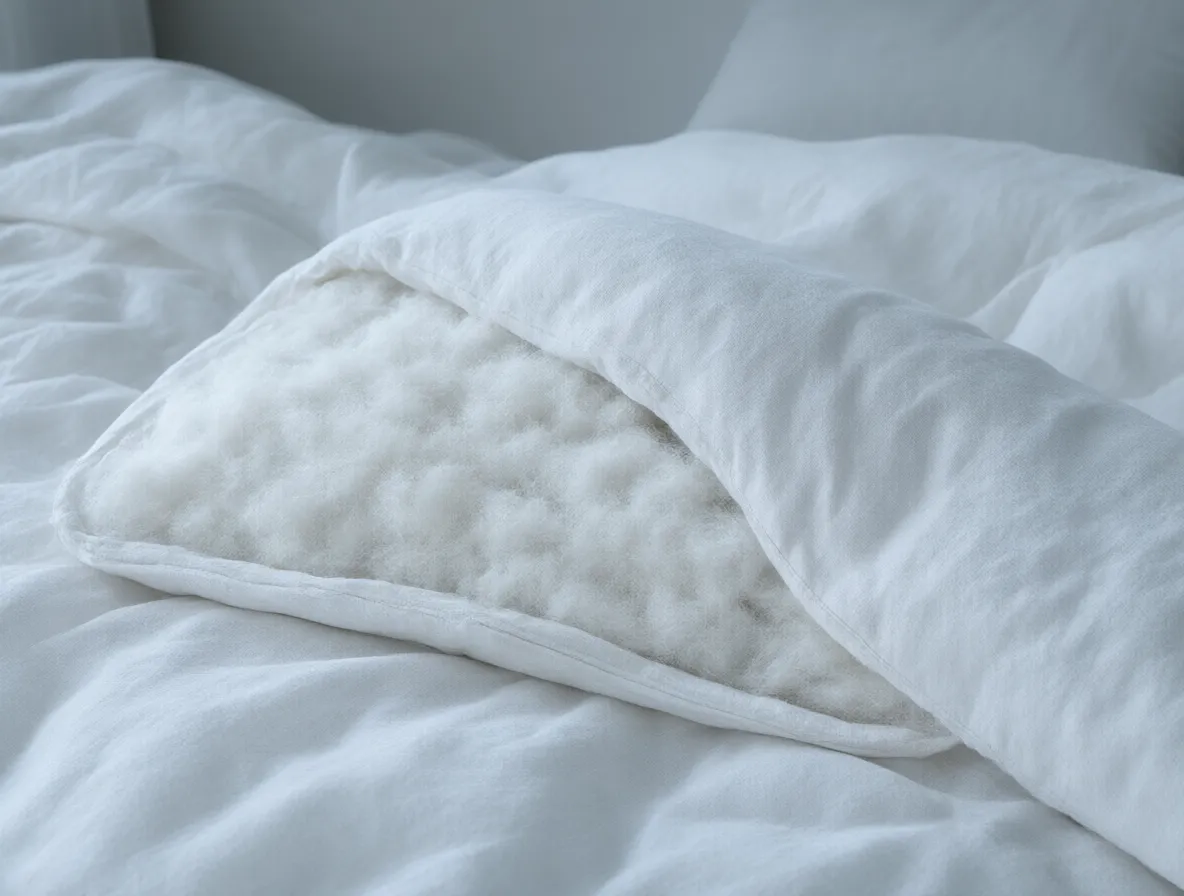
Percale weave on the outside, open fibre fill on the inside.
How the trial works
Bedding takes weeks to evaluate honestly, because your sleep depends on the season, the room and the week you are having. So we do not ask you to decide on night one.
Coolnest ships with a 100-night home trial from $149. If it is not right for your bed, send it back.
Change the room, change the sheets, lighten the cover — and if the warm nights stay, try the duvet as one more variable rather than a leap of faith.